

Introduction
Across India and beyond, disposable cutlery has quietly become one of the most essential items in the food service industry. Whether it’s a busy cloud kitchen packing 200 meals an hour, a wedding caterer serving thousands of guests, or a corner café handing out takeaway snacks, every food business depends on cutlery that is hygienic, easy to use, and convenient.
For decades, plastic cutlery was the default answer. Plastic spoons, forks, and knives were cheap, light, and widely available, so most brands stocked them without a second thought. But customer expectations have shifted. People now look at the full experience, including how their food is served and what it’s served with. This shift has pushed food businesses to explore paper cutlery and other forms of eco-friendly disposable cutlery as a smarter, more responsible alternative.
In this blog, we’ll compare plastic and paper cutlery, look at why brands are making the switch, and help you understand what to look for when choosing an eco-friendly cutlery supplier for your business.
Understanding Plastic Cutlery and Its Drawbacks
Plastic cutlery feels harmless because each piece is so small. The problem is volume. A single mid-sized cloud kitchen can hand out 300 to 500 plastic spoons a day. Multiply that across the country and the scale becomes hard to defend.
There is also a legal angle that many small food businesses still overlook. On 1 July 2022, the Government of India banned the manufacture, import, stocking, distribution, sale, and use of several single-use plastic items. That list specifically includes plastic cutlery, plates, cups, straws, and stirrers, along with polystyrene items and certain wrappers. The rule was issued by the Ministry of Environment, Forest and Climate Change under the Plastic Waste Management Amendment Rules, 2021.
In simple language: serving food on banned plastic items is not just an ethical issue, it is a compliance issue. State pollution control boards have been issuing notices and penalties. For a small food business, even one notice can cost more than a year’s worth of cutlery.
Key takeaway: If you are still using plastic spoons, forks, and knives, you are operating against a national rule. The switch is not optional anymore, it is overdue.
What is Paper Cutlery ?
Paper cutlery is a category of disposable cutlery made primarily from paper-based materials. It is designed to handle the everyday job of serving and eating food, just like the plastic versions it replaces, but with a much smaller environmental footprint.
A typical paper cutlery range includes:
- Paper spoon
- Paper fork
- Paper knife
- Paper dessert spoon
- Paper cutlery packs (a combined set)
Good-quality paper cutlery is sturdy, comfortable to hold, and safe for a wide range of foods. It works well for cafés, restaurants, catering kitchens, takeaway counters, office events, birthday celebrations, and corporate gatherings. For any brand that wants to cut down on plastic without complicating its operations, paper cutlery is one of the simplest switches to make.
Why Food Businesses Are Switching from Plastic to Paper Cutlery
Modern customers notice the details. When a meal arrives with clean packaging and thoughtful cutlery, it leaves a quiet but lasting impression. A food brand doesn’t need to put up loud sustainability banners. Small, visible choices, like serving with paper instead of plastic, communicate the same message far more effectively.
Paper cutlery also fits the aesthetic that many modern food brands are aiming for. It looks cleaner, feels more natural, and pairs beautifully with the kraft and minimal packaging styles popular with cafés, bakeries, cloud kitchens, premium delivery brands, and event caterers. In a market where presentation drives repeat orders, that visual upgrade matters.
What Makes Eco Friendly Cutlery Worth the Switch?
Eco friendly cutlery is about more than just replacing plastic. It signals to customers that your brand pays attention, makes considered choices, and cares about the experience beyond the plate.
When diners see eco-friendly disposable cutlery arriving with their food, it adds quiet trust and perceived value to the brand. Over time, that translates into better reviews, more repeat orders, and stronger word of mouth.
The practical benefits for businesses include:
- A stronger, more modern brand image
- A better impression on first-time customers
- Reduced dependence on single-use plastic
- Cleaner alignment with responsible packaging trends
- A more professional look for takeaway and event service
These are the reasons more buyers are now searching specifically for an eco friendly cutlery supplier or an eco friendly cutlery manufacturer for their bulk requirements.
How to Choose a Supplier Without Getting Burned
This is the part most blogs skip. Choosing a paper cutlery supplier is easy. Choosing one that delivers consistent quality is harder. A few checks save a lot of trouble.
- Ask for samples before bulk ordering. Hold the cutlery. Bend it. Dip it in hot tea or curry for two minutes. If it goes soft quickly, it will fail in the customer’s hand too.
- Confirm the coating. Ask whether it is food-grade and whether the cutlery is truly biodegradable. Get this in writing if you can.
- Test bulk consistency. Quality often drops between the sample batch and the bulk batch. Order a small first batch before committing to large monthly volumes.
- Look at peak-season delivery capacity. Wedding season, festival season, and exam-result season all create cutlery shortages. A supplier who delivers in January may disappoint you in November.
- Ask about customisation. Branded cutlery, even simple printed logos, makes a noticeable difference for premium brands and event caterers.
Price alone is a poor filter. A cheaper supplier who delivers inconsistent stock costs more in complaints than a slightly pricier one who delivers steady quality.
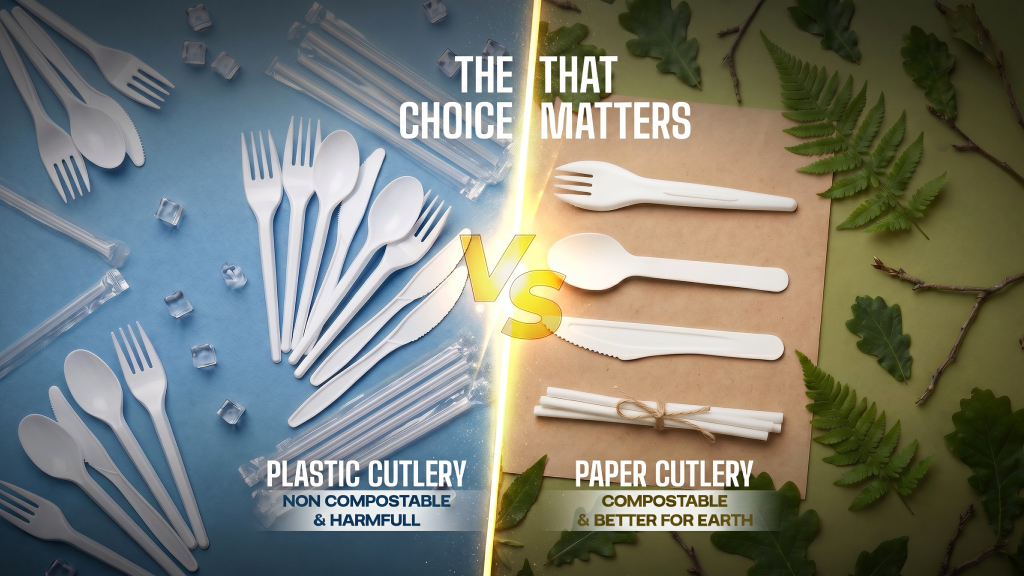
Plastic Cutlery vs Paper Cutlery: The Quick Comparison
Plastic cutlery is easy to find and cheap to buy, but it’s no longer the obvious choice for brands that want to look modern and responsible. Paper cutlery, on the other hand, delivers a cleaner, more eco-conscious experience that fits today’s food service trends.
The decision really comes down to what kind of brand you want to be. If you only need basic, bare-minimum disposables, plastic will do the job. But if you care about customer experience, presentation, and long-term brand image, paper cutlery is the smarter pick.
Conclusion
Paper cutlery is not a trend, it is the new working standard for food businesses in India. The 2022 single-use plastic ban made the direction clear, and customer expectations have caught up. Switching is no longer a question of whether, but how soon and how well.
The brands that move thoughtfully, choose the right supplier, and treat cutlery as part of the customer experience will benefit the most. The ones who delay will keep paying small costs that quietly add up, in fines, in complaints, and in lost repeat orders.
Good cutlery will not save bad food. But good food served with cheap, plastic, or flimsy cutlery loses something every single time. Paper cutlery, chosen carefully, is one of the easiest upgrades a food business can make this year.